
Articles Nov 17, 2026
Oncology Drugs: Main Types, Common Examples and How They Are Chosen
Written by Oncology Team
The Global Burden Behind Oncology Drug Demand
Lung cancer was the most common cancer in 2022, with almost 2.5 million new cases, roughly 1 in 8 diagnoses (American Cancer Society, 2024). Breast cancer followed with 2.3 million cases and colorectal cancer with 1.9 million. By 2050, new cases are projected to pass 35 million, a 77% increase (World Cancer Day factsheet).
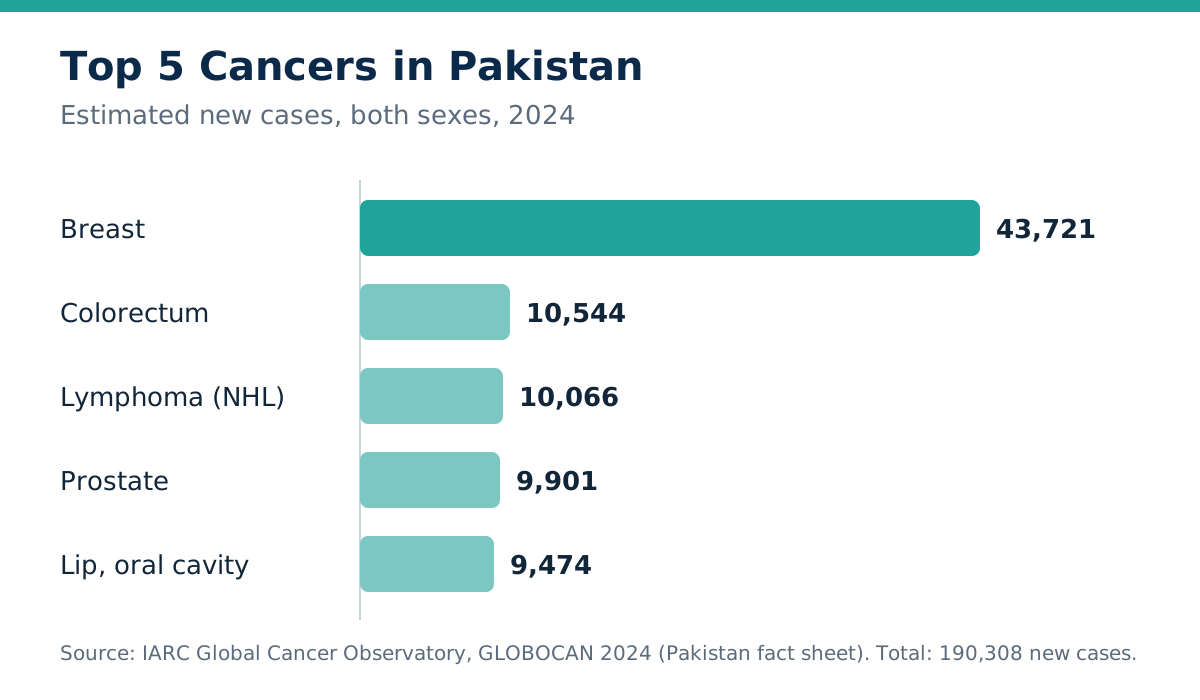
Pakistan reflects the same pressure. GLOBOCAN 2024 estimated 190,308 new cancer cases and 119,742 cancer deaths there. Breast cancer was the most frequent type with 43,721 new cases (23.0% of all cases, and 44% of cancers in women), followed by colorectal cancer with 10,544 cases (5.5%) (IARC Pakistan fact sheet, GLOBOCAN 2024).
Meeting this demand locally is important. Pharmaceutical manufacturers in Pakistan, such as Kaizen Pharmaceuticals, contribute to the domestic production of oncology medicines, supporting local availability and strengthening the pharmaceutical supply chain.
Main Types of Oncology Drugs
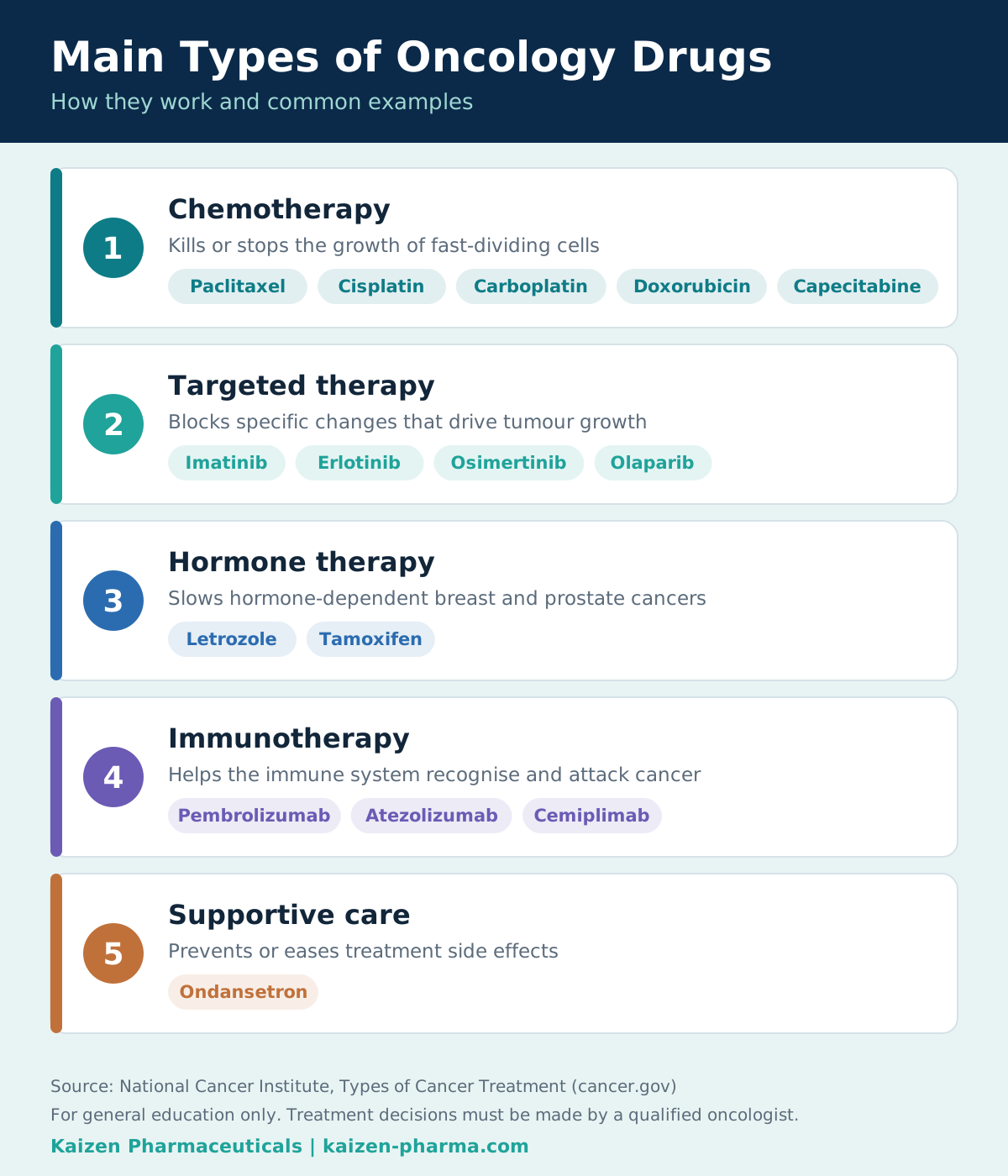
The US National Cancer Institute (NCI) lists chemotherapy, hormone therapy, immunotherapy and targeted therapy among the main cancer treatments, alongside surgery and radiation (NCI). Most patients receive a combination rather than a single treatment.
Chemotherapy
Chemotherapy kills or stops the growth of fast-growing cells. Common examples include paclitaxel, cisplatin, carboplatin and doxorubicin (CancerQuest), while capecitabine is a widely used oral option. Because chemotherapy also affects some healthy cells, supportive care is an important part of treatment.
Targeted Therapy
Targeted drugs act on specific changes in cancer cells that help them grow, divide and spread (NCI). Kinase inhibitors such as imatinib, erlotinib and sorafenib are well-known examples (CancerQuest). Others include osimertinib for EGFR-mutated lung cancer, nintedanib in selected advanced lung cancer settings, nilotinib for chronic myeloid leukaemia, cabozantinib and lenvatinib in liver and kidney cancers, tucatinib for HER2-positive breast cancer, and the PARP inhibitor olaparib. These drugs usually require the tumour to be tested for the relevant change first.
Hormone Therapy
Hormone therapy slows or stops the growth of breast and prostate cancers that depend on hormones (NCI). Letrozole and tamoxifen are typical breast cancer examples. In hormone receptor-positive, HER2-negative advanced breast cancer, the CDK4/6 inhibitor palbociclib is used alongside hormone therapy.
Immunotherapy
Immunotherapy helps the immune system fight cancer (NCI). Checkpoint inhibitors such as pembrolizumab are the best-known group.
Supportive Care Medicines
These do not treat the tumour but make treatment tolerable. Ondansetron, for example, is used to prevent nausea caused by chemotherapy.
Kaizen Pharmaceuticals' oncology pharmaceutical portfolio spans targeted therapies, oral chemotherapy and supportive care medicines.
Oncology Drugs on the WHO Essential Medicines List
In September 2025, WHO updated its Model List of Essential Medicines. Pembrolizumab was added as a first-line monotherapy for metastatic cervical, colorectal and non-small cell lung cancer, with atezolizumab and cemiplimab listed as alternatives for the lung indication (WHO). The expert committee reviewed seven applications covering 25 cancer medicines and recommended only those shown to prolong life by at least 4 to 6 months (PAHO). WHO also notes that cancer medicines now account for about half of all new drug approvals by regulators.
How Doctors Choose Drugs Used in Oncology
The right treatment depends on the type of cancer and how advanced it is (NCI). In practice, oncologists weigh tumour type and stage, biomarker or mutation results, the patient's age and other health conditions, and which drugs are available locally. This is why the same cancer can be treated differently from one patient to the next, and why patients should never choose or change a medicine without their oncologist.
Access to Oncology Drugs in Emerging Markets
Outcomes differ sharply by income level. In countries with a low Human Development Index, 2022 saw 811,014 new cases and 543,337 deaths. In very high HDI countries, there were 9,296,171 cases and 3,643,502 deaths (Medical News Today, summarising WHO data). Calculated from those figures, that is roughly 67 deaths per 100 new cases in low HDI countries versus 39 in very high HDI countries. Late diagnosis and limited treatment access are among the likely reasons.
WHO has endorsed strategies such as dose optimisation to improve affordability (PAHO). Reliable local production and distribution by oncology medicine manufacturers can also strengthen supply continuity for hospitals and distributors.
Frequently Asked Questions
1. What are the most common oncology drugs?
Chemotherapy agents such as paclitaxel, cisplatin and capecitabine, targeted drugs such as imatinib and olaparib, and hormone therapies such as letrozole and tamoxifen are among the most widely used.
2. What is the difference between chemotherapy and targeted therapy?
Chemotherapy affects fast-growing cells in general, while targeted therapy acts on specific changes found in cancer cells.
3. Are all oncology drugs given by injection?
No. Many, including capecitabine and several targeted therapies, are taken as oral tablets or capsules.
References
1. Bray F, et al. Global cancer statistics 2022: GLOBOCAN estimates. CA Cancer J Clin. 2024;74(3):229-263. https://doi.org/10.3322/caac.21834
2. American Cancer Society. Global Cancer Facts & Figures, 5th Edition. PDF
3. World Cancer Day. General cancer facts. PDF
4. IARC Global Cancer Observatory. Pakistan fact sheet, GLOBOCAN 2022. PDF
5. National Cancer Institute. Types of Cancer Treatment. cancer.gov
6. CancerQuest. How cancer treatments work. cancerquest.org
7. WHO. WHO updates list of essential medicines to include key cancer, diabetes treatments, 5 September 2025. who.int
8. PAHO. WHO updates list of essential medicines, 8 September 2025. paho.org
9. Medical News Today. An estimated 35 million new cancer cases to occur in 2050, WHO warns. medicalnewstoday.com
*Disclaimer: This information is intended for healthcare professionals and trade partners.
Kaizen Pharmaceuticals products are prescription medicines and should be used only under the supervision of a qualified physician.
Product availability and approved indications vary by market. Refer to the approved prescribing information for full details.
This content is not medical advice. To report an adverse event, please visit our Report an Adverse Event page.*